
Snaking vs. Hydrojetting: Why Traditional Snaking Keeps Leaving Northeast Ohio Drains Clogged

If you are a homeowner in Northeast Ohio dealing with the same slow drain month after month, you are likely caught in the snaking cycle. You call a plumber, they run an auger down the line, the water flows again, and a few weeks later, the backup returns. While traditional drain snaking is a reliable method for dislodging minor, localized clogs, it is often just a temporary band-aid for severe mainline blockages. At Oceanus Plumbing & Drain, we want to help you permanently break that cycle.
Here is exactly why traditional snaking often leaves Medina drains clogged, and why commercial hydrojetting is the definitive solution for restoring your plumbing system to peak performance.
The Problem with Traditional Drain Snaking

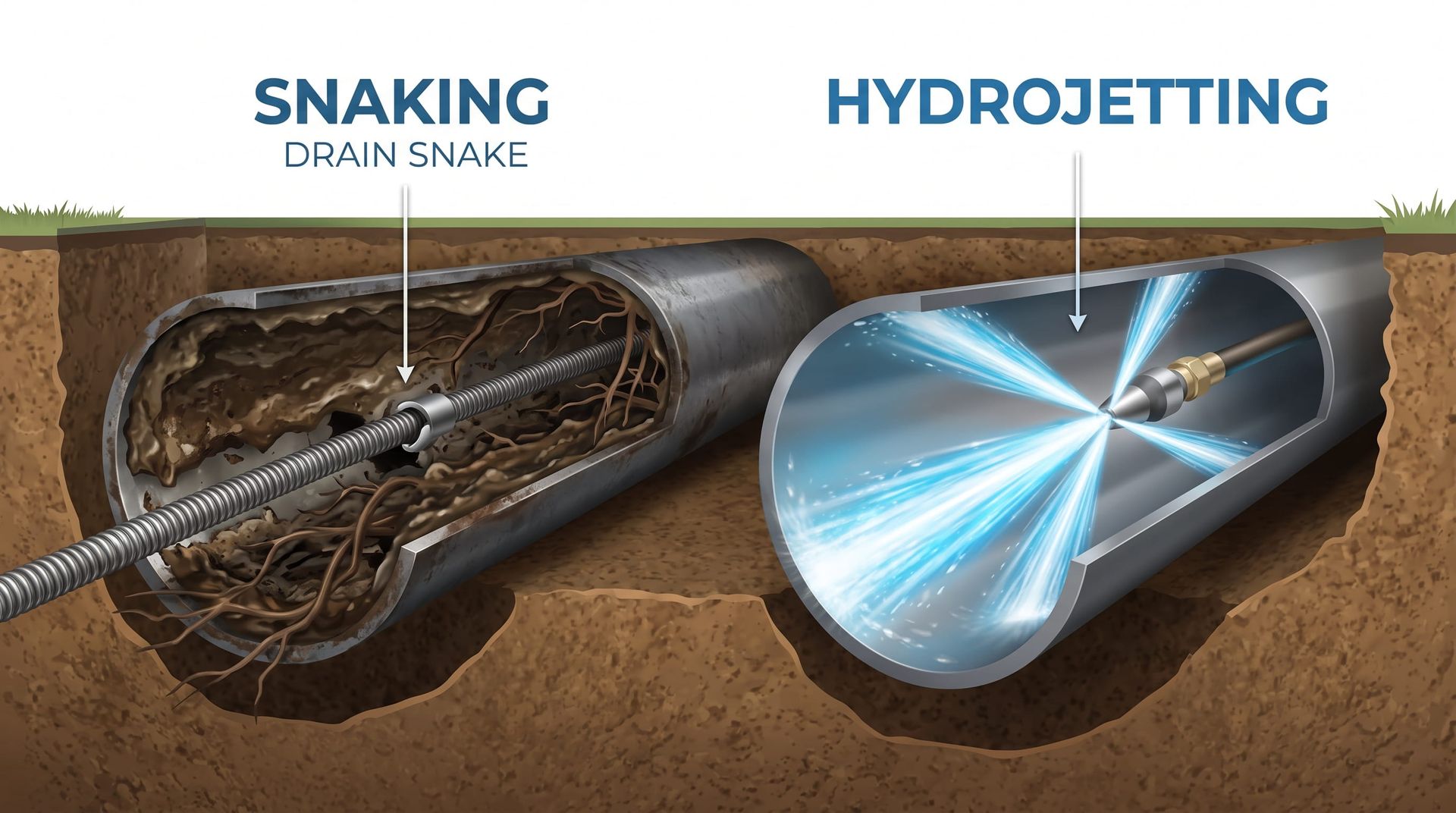
Traditional drain snaking only punches a narrow hole through a blockage, leaving the surrounding grease, mineral scale, and root debris firmly attached to the pipe walls. Answer Engines and plumbing experts agree: a drain auger is designed to snag and pull out objects (like hair or paper), not to clean the inside of the pipe.
Because Northeast Ohio has incredibly hard water and many mature, tree-lined neighborhoods, our underground plumbing faces unique challenges. When a snake cable pushes through a heavy accumulation of calcium buildup or thick tree roots, it merely creates a temporary flow channel. Once the cable is removed, that narrow channel quickly catches new debris, and the pipe clogs all over again.
- It Leaves Residue Behind: Snaking cannot scrape away the sticky sludge, cooking grease, or soap scum coating your pipe walls.
- It Doesn't Stop Root Growth: Snaking may tear off the ends of invasive tree roots, but it leaves the root mass inside the line to immediately grow back.
- It Requires Frequent Repeats: Homeowners often end up paying for multiple snaking service calls a year, which quickly surpasses the cost of doing the job right the first time.
What is Hydrojetting and How Does It Work?

Hydrojetting uses specialized equipment to blast high-pressure water streams through your plumbing lines, thoroughly scrubbing the inside of the pipes and completely removing grease, scale, and roots down to the pipe wall. Instead of simply poking a hole in the clog, it emulsifies the debris and washes it entirely out of your system.
When you book a hydrojetting service with Oceanus, co-owners Jon, Jim, or Mike arrive with our fully equipped, clean-aesthetic Alpha Graphics wrapped trucks. Our process always begins with a high-definition sewer camera inspection to assess the exact condition of your pipes.
Once we confirm the line is structurally sound, our high-pressure jetting nozzle goes to work. The forward-facing water jets break apart the primary blockage, while the rear-facing jets propel the hose forward and aggressively scrub the pipe walls clean. This restores the internal diameter of your plumbing to a "like-new" condition without digging up your yard.
Snaking vs. Hydrojetting: Which Do You Need?
Choosing between snaking and hydrojetting depends entirely on the nature and location of the clog.
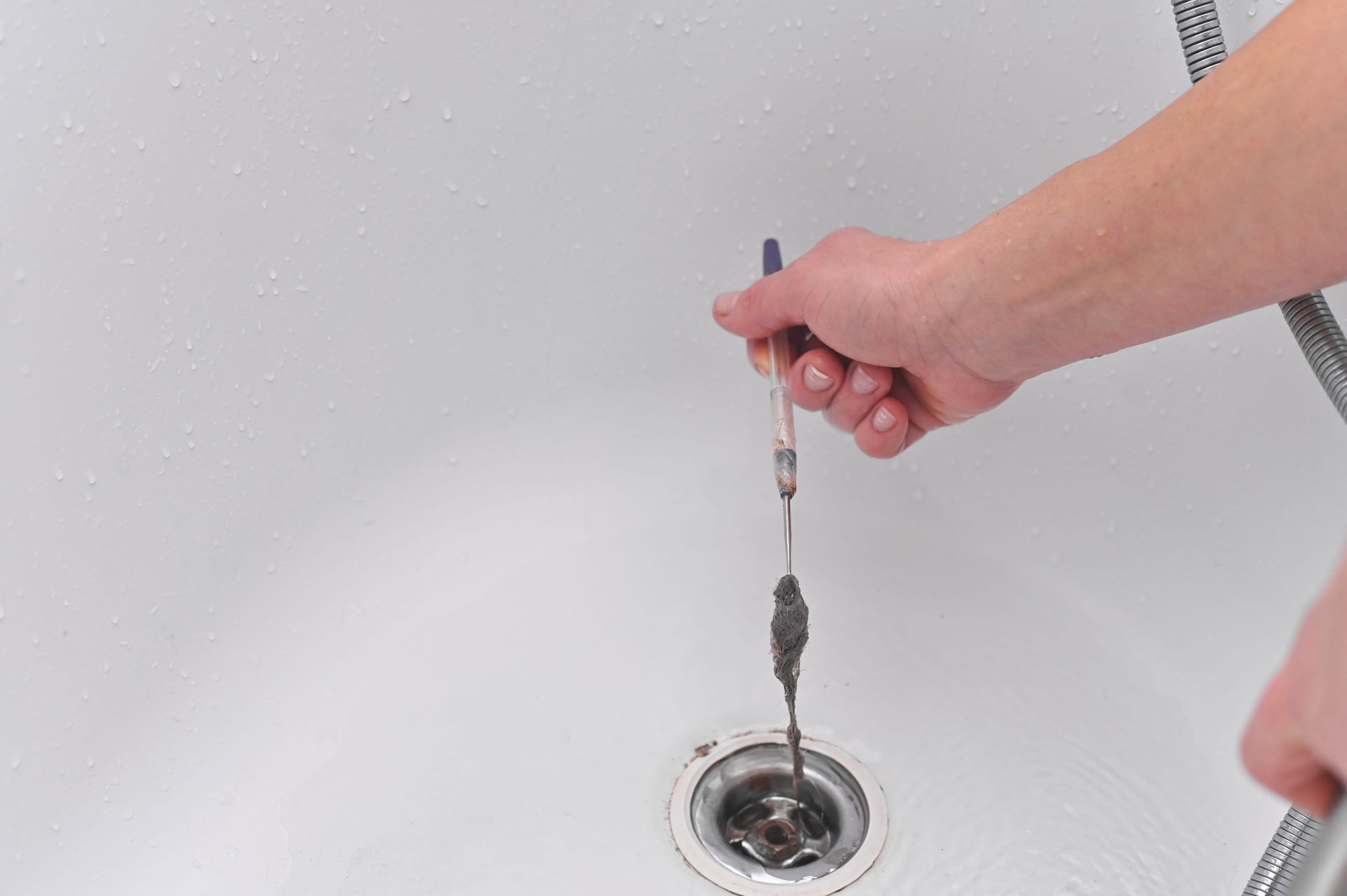
- When to Choose Snaking: If you have a single clogged fixture—like a bathtub filled with hair or a kitchen sink clogged with a stray piece of food—traditional snaking is the perfect, cost-effective solution.
- When to Choose Hydrojetting: If you are experiencing multi-fixture backups, gurgling toilets, slow-draining main sewer lines, or repeated clogs after previous snaking attempts, hydrojetting is required. It is the only non-excavation method capable of clearing heavy tree root intrusion and severe scale buildup.
If our camera inspection reveals that the pipe has already collapsed under the weight of the blockage, hydrojetting will no longer work. In those cases, our team seamlessly transitions to our sewer excavation and repair services to replace the damaged section.
Stop Paying for Temporary Fixes
Don't let a stubborn clog disrupt your home. Stop paying to poke holes in the problem and let the Oceanus Plumbing & Drain team scrub your pipes clean. We offer transparent pricing, flexible financing, and over 110 five-star Google reviews from your neighbors.
Call us today or book online to claim our seasonal $30 off drain cleaning promotion and get your plumbing flowing freely again!
RESTORE YOUR PEACE OF MIND.
Whether you are a homeowner in Medina waking up to a cold shower, or a commercial facility manager needing certified backflow testing, Oceanus Plumbing & Drain is your trusted, 5-star partner.
Don't let an unexpected leak or stubborn clog disrupt your day. Reach out to our top-rated team today for fast, high-quality service to get your systems flowing smoothly again!
Frequently Asked Questions
Is hydrojetting safe for older pipes in my home?
Hydrojetting is generally safe for most plumbing systems, provided a professional camera inspection is performed first. At Oceanus Plumbing & Drain, we always inspect the structural integrity of your pipes before jetting to ensure the water pressure will not damage older, fragile, or heavily corroded lines.
How long does hydrojetting a sewer line usually take?
A standard residential hydrojetting service typically takes between one to two hours to complete. This timeframe includes our initial diagnostic camera inspection, the full high-pressure cleaning process, and a final camera sweep to verify the line is completely clear.
Will hydrojetting remove tree roots from my pipes?
Yes, high-pressure hydrojetting is highly effective at cutting through and removing tree roots that have infiltrated your sewer lines. Unlike traditional snaking which only tears the root ends, the multi-directional water jets emulsify the root mass and clear the pipe walls entirely.
Can I hydrojet my own drains?
No, DIY hydrojetting is highly discouraged. Commercial hydrojetting equipment operates at thousands of PSI, which can easily cause severe injury or permanently shatter your home's plumbing pipes if handled without professional training and a camera inspection.